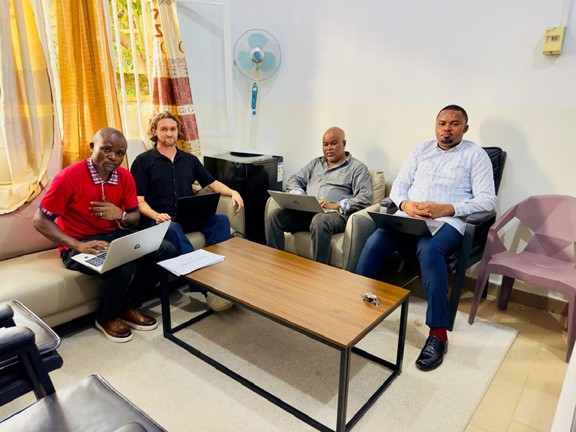
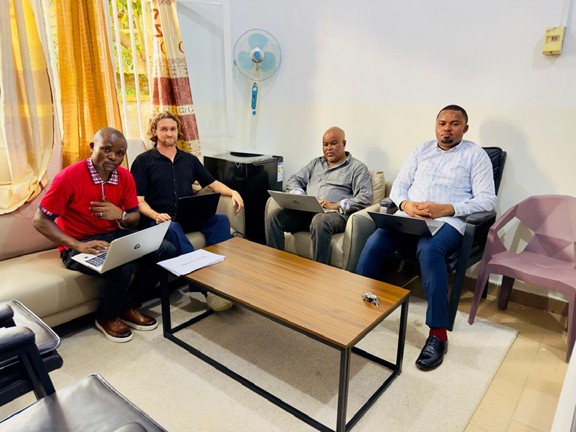
Kananga, Democratic Republic of Congo (DRC) presented one of LoGRI’s most ambitious challenges – and one of its most significant achievements. Property taxation in the DRC’s Kasaï Central province had long been dysfunctional: paper-based records, unclear boundaries, flat-rate taxes unrelated to property value, and handwritten cash collection, with compliance as low as 8.8% in 2018. Beyond a revenue problem, this situation posed a significant governance challenge, with direct implications for public trust and state credibility.
Building the Foundations
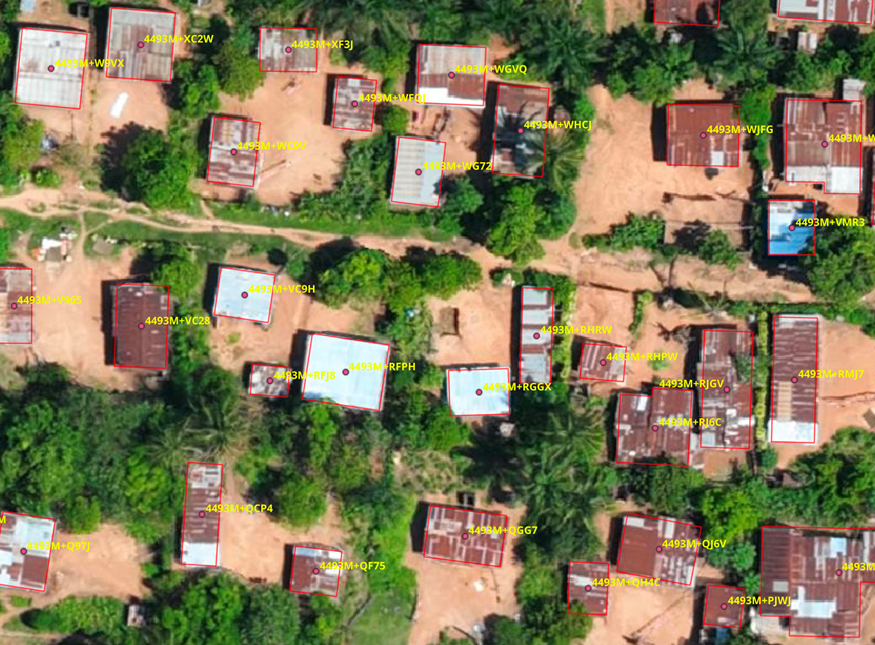
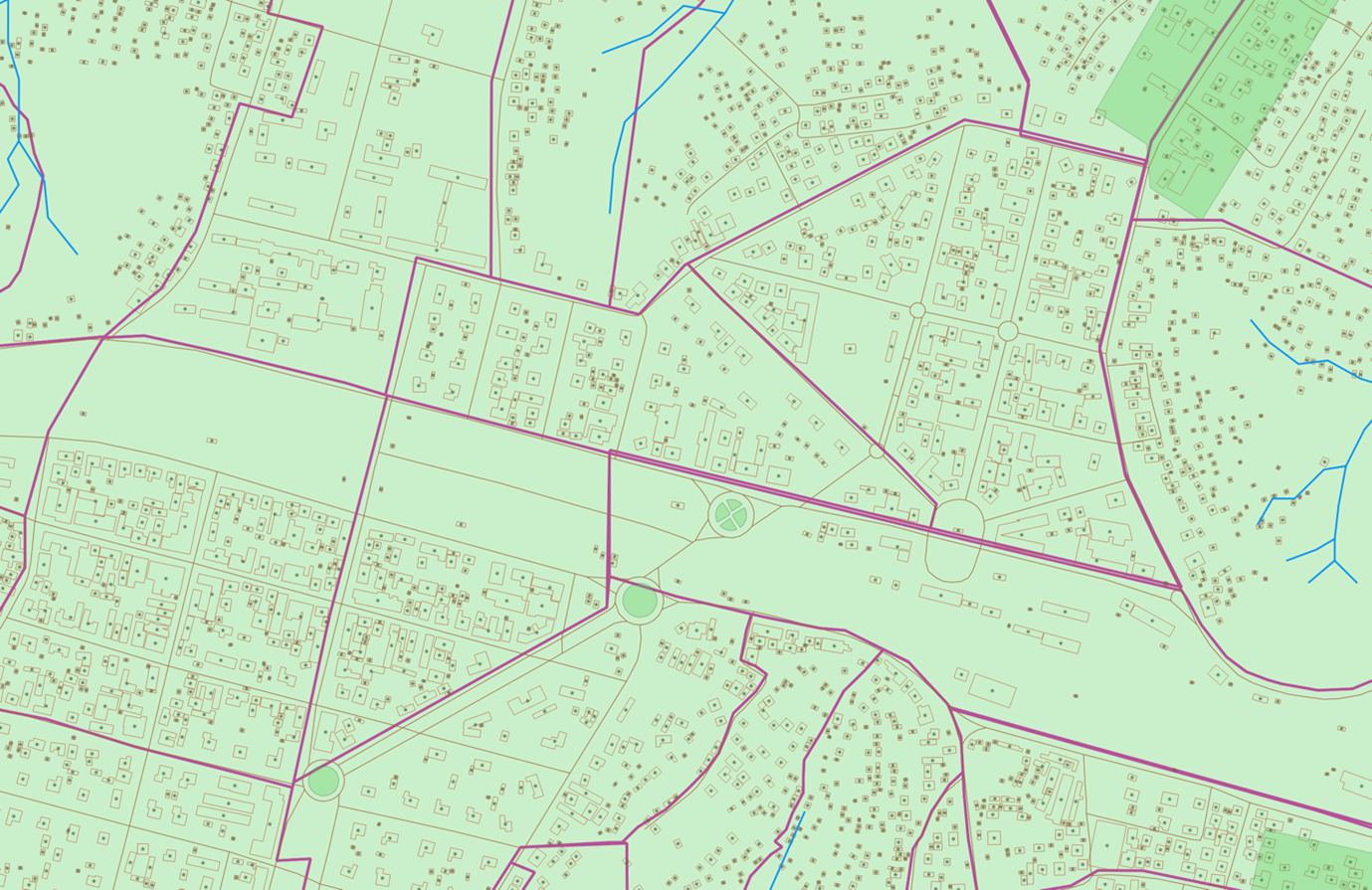
Working with a local partner, l’Organisation d’Études Economiques sur le Kasai (ODEKA), and researchers from the University of California-Berkeley, LoGRI helped build a digital property tax system from the bottom up. Using drone imagery, machine-learning algorithms, and the same simplified methods deployed in Sierra Leone, the team mapped 9,000 hectares and identified around 130,000 buildings – a 3.4-fold increase in available property data and the first comprehensive map in the city’s history. Moptax 2.0 was then deployed and adapted into French for the first time, creating a cloud-based property registry with automated valuation, digital billing, and payment tracking. Integration with mobile money and banking systems further reduced reliance on cash collection, strengthening accountability and reducing leakage.
Lasting Impact
The work was effectively delivered despite repeated political turnover and funding constraints. While short-term revenue gains were modest, the lasting achievements are substantial: a geo-referenced property database, a modern digital registry, secure payment channels, and frontier research on tax design. Kananga demonstrates that modern fiscal infrastructure can be built even in the most challenging administrative environments.
Related Projects
Status: Completed
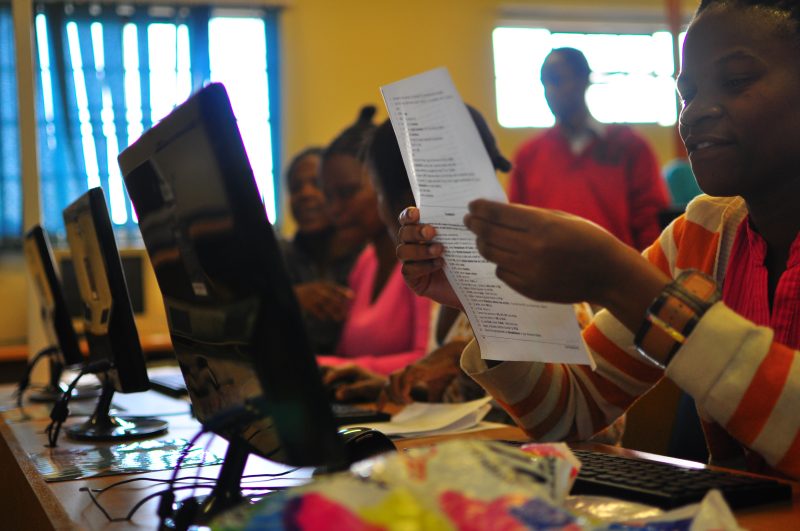
IT and Property Tax Reform in the Province of Kasaï Central, DRC
Country:
 Democratic Republic of Congo
Related Research
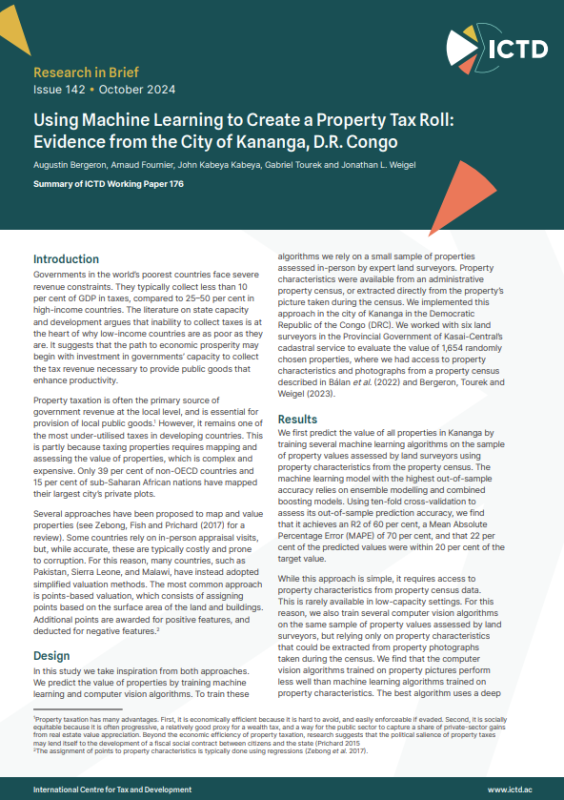
2024 October
Country:
Democratic Republic of Congo